Right to Repair in 2026: Action Guide for Tech Repair Professionals
The right to repair isn't just a movement anymore—it's the new reality for tech care professionals. After years of battling for basic access, 2025 marked the leap to Right to Repair 2.0. Now, we're not just talking about getting parts and manuals—we're fighting for real, enforceable protections against things like software locks and parts pairing that quietly threaten our industry's future.
Why 2026 Is a Turning Point
New laws are kicking in. Legislative momentum is building. Manufacturers are watching our every move. States that act in 2026 will set the tone for device design, calibration access, and repair policies across the country. This is the year to get loud, get organized, and make sure tech repair professionals are leading—not following—the conversation.
Related: Digital Right to Repair 2026: The New Rules of the Game for Tech Repair Pros
What's Changed: From Access to Enforcement
States like Oregon and Colorado didn't just talk—they passed laws that explicitly ban parts pairing. The EU's new Right to Repair directive, launching in 2026, weaves repair into both consumer protection and climate action. We're moving from symbolic gestures to rules with teeth.
These shifts represent a fundamental transformation in how we approach independent repair. The question is no longer whether repair should be protected—but how it works, who gets to do it, and who benefits.
See also: Big Tech Decides When Your Stuff Breaks. Right to Repair in 2026 Can Stop Them
Where the U.S. Stands Now
States with real digital right-to-repair laws: New York, Minnesota, California, Oregon, Colorado, Washington, and Texas. More states are on deck for 2026, with legislative sessions starting across the country.
🎯 Virginia and Maryland: Priority Targets
Both states start their legislative sessions on January 14, 2026.
Virginia already has a digital right-to-repair bill on record and strong repair momentum. Maryland lawmakers have demonstrated interest in repair as both consumer protection and climate policy. These are critical battlegrounds where tech repair professionals can make an immediate impact.
Action Plan: What Tech Repair Pros Should Do Now
- Get organized locally. Build relationships with your legislators before sessions start. Don't wait for a crisis—be the expert they trust.
- Document your pain points. Collect stories, photos, and invoices showing how parts pairing, software locks, and manufacturer restrictions impact your business and customers. Real-world evidence is gold.
- Prepare to testify. Your voice matters. Use clear, specific examples of how these barriers cost you time, revenue, and reputation. Lawmakers need to hear from YOU, not just lobbyists.
- Team up. Align with consumer, environmental, and workforce groups. We're stronger together, and united voices get noticed.
- Educate your customers. Be transparent about what's blocking repairs and how policy can fix it. Use your storefront, social media, and receipts to share the message.
Further reading: Digital Right to Repair: Why You Deserve Control Over Your Devices
🔍 Find Your State Representatives
Building relationships with your state lawmakers is a game-changer for your shop and the right to repair movement. Use these trusted resources to find your legislators and their contact information.
Official Legislator Lookup Tools:
🔗 Common Cause: Find Your Legislators
Simple address lookup for state and federal representatives
🔗 Open States: Find Your Legislator
Comprehensive state legislative information and contact details
🔗 USA.gov: Elected Officials Directory
Official government directory for all elected representatives
💡 Pro Tip: You can also search "[your state] find my legislator" to access your state's official legislative website, which will have the most current contact information.
Connect with Your State Representatives
Sample Message to Request a Meeting
Email Template:
Subject: Request for Meeting: Local Tech Repair Shop & Right to Repair
Hi [Representative Name],
My name is [Your Name], and I own [Your Shop Name] in [Your Town]. As a local small business owner, I'm reaching out to discuss the impact of right to repair legislation on our community and local economy.
I'd appreciate the opportunity to meet with you (in person or virtually) to share how recent and upcoming laws affect both our business and our customers. I can provide real-world examples and answer any questions you may have about the tech repair industry in [Your District].
Please let me know your availability in the coming weeks. Thank you for your time and for representing our community!
Best regards,
[Your Name]
[Your Shop Name]
[Contact Info]
💡 Outreach Tips:
- Be concise, respectful, and direct
- Mention you're a constituent and local business owner
- Offer specific dates/times if possible
- Follow up if you don't get a response within a week
Get the Word Out: Contacting Local Media
Don't underestimate the power of local media to amplify your story and put the spotlight on the challenges—and importance—of independent repair. Media coverage not only boosts your shop's visibility but also helps educate the community and pressure policymakers to act.
Who to Contact:
- Local newspapers (editors, business reporters, community desk)
- TV news stations (assignment editors, consumer reporters)
- Radio stations (morning show hosts, news directors)
- Community blogs or online news outlets
- Local business journals
Sample Email to Local Media
Email Template:
Subject: Local Tech Repair Shop Champions Right to Repair in 2026
Hi [Name],
I'm [Your Name], owner of [Your Shop Name] here in [Your Town]. As a local tech repair professional, I'm on the front lines of the right to repair movement—a cause that's gaining real momentum in 2026 with new laws and growing community support.
Our shop has seen firsthand how software locks, parts pairing, and manufacturer restrictions impact local families, small businesses, and the environment. I'd love to share our story and help your audience understand why protecting the right to repair matters for everyone in [Your Town].
Would you be interested in covering how these changes affect our community, or speaking with me for a local perspective? I can provide real-world examples and connect you with customers who've been impacted.
Thanks for your time—looking forward to connecting!
Best,
[Your Name]
[Your Shop Name]
[Contact Info]
💡 Pro Tips:
- Personalize your email—mention a recent story they ran or why their audience will care
- Include a photo of your shop/team if possible
- Offer to demonstrate a repair or show how policy changes impact real customers
What Success Looks Like in 2026
More State Right to Repair Laws
Laws tackling software locks and anti-repair tactics
Clearer Manufacturer Rules
Enforceable expectations for device makers
Fewer Repair Barriers
Reduced warning pop-ups and feature lockouts
Industry Confidence
Investment in new skills, tools, and staff
United Tech Repair
A respected, organized industry coalition
TCA's Take: Repair Is Infrastructure—And So Are You
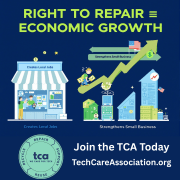
Repair keeps devices working, money in local economies, and e-waste out of landfills. In 2026, we're not asking if repair should be protected—we're deciding how it works, who gets to do it, and who benefits. That means showing up, speaking out, and supporting each other.
Every Voice Counts
Every shop, every tech, every customer story counts. The future of repair is being written right now—by people who care enough to act. Let's make sure it's our story that gets told.
Ready to Take Action?
Join the movement and make your voice heard in 2026
Join TCA's Advocacy Network Share Your Story Subscribe for UpdatesRepair first. Repair local. Repair together.
 Tech Care Association 2025





Leave a Reply
Want to join the discussion?Feel free to contribute!